Judith Balie, custodian of the living past in Genadendal’s Valley of Grace
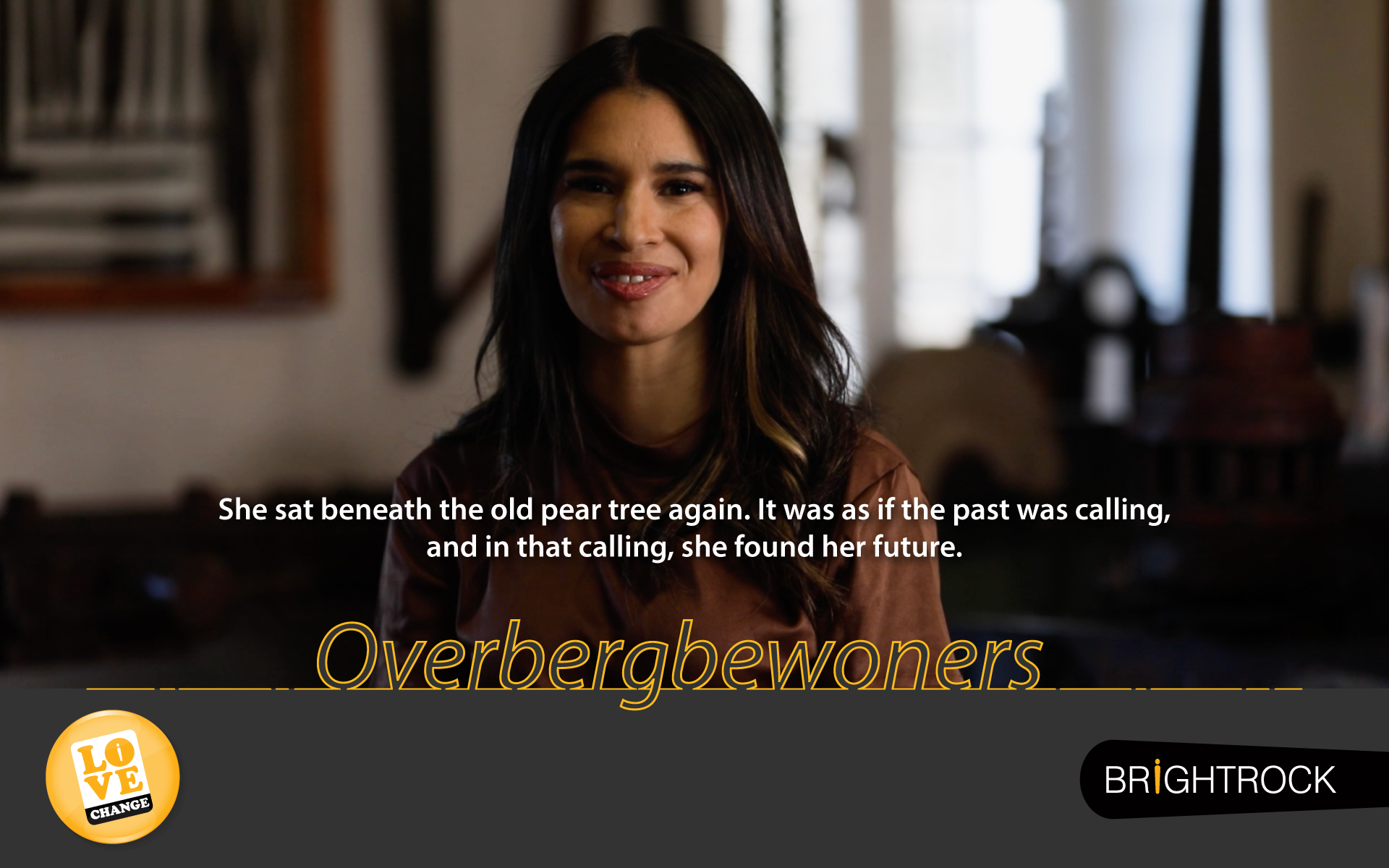
Her roots in this small village in the Overberg beckoned her back, to tell its story to future generations.
In the shade of an old pear tree in a garden in Genadendal, the Valley of Grace, Judith Balie sits in the stillness of memory.
Birdsong and the rustle of leaves accompany her thoughts as she settles onto the four-sided wooden bench that frames the weathered trunk.
It’s her church of nature, her place of solitude in the thick of a busy day.
The tree rises like a steeple, its roots running centuries deep. In 1738, when the Cape of Good Hope was still a colony of the Dutch East India Company, the first seed was planted by a Moravian Church missionary named Georg Schmidt.
He had sailed from Germany to this distant outpost. Baviaanskloof, it was called. The ravine of baboons.
He built a chapel on a stone foundation, with walls of clay and a roof of straw. He sat beneath the pear tree, reading the Bible to his flock.
The mission station, the first in South Africa, grew into a hamlet, with a mill and a school and a forge.
Today, at its heart, in the Riviersonderend Mountains in the Overberg, stands a museum where history breathes. Judith is its custodian. She, too, has roots that bind her to this place.
A great-great-grandparent was one of the first students at the teachers’ training college in Genadendal, and her father, Dr Isaac Balie, was the town’s historian and curator of the Genadendal Mission Museum.
Judith lived here here from the age of two. As an adult, she set off to see the wider world, studying occupational therapy at Stellenbosch and psychology at Bob Jones University in South Carolina.
Genadendal beckoned her back home. She walked the trail again, with its rock pools and proteas and sweeping panorama of the Overberg Valley.
She sat beneath the old pear tree again. It was as if the past was calling, and in that calling, she found her future.
The museum is Genadendal’s gift to itself.
“Every artefact and building has a story to tell,” says Judith. “It’s hard to visit the site and not experience it. You still feel the presence of everyone who had an impact on this town.”
In the weight of a blacksmith’s anvil, in the yellowing pages of a family Bible, in the finger-like prongs of a wooden pitchfork hewn from a single branch, there is the imprint of lives lived in toil and faith. But the past is not yet past.
Even today, Genadendal, with its population of just over 5,000, subsists on the goodness and grace of a community where people take care of one another.
In the early years of the mission station, hands that prayed were also hands that worked.
The crafters of the town earned a reputation for handmade goods of the highest quality, built to last for generations.
A wooden riempie chair with a seat of woven leather thongs. Books printed on a press and lovingly bound. A utility knife with a curved blade and lathe-turned handle, the Herneuter, so prized by collectors that it has made Genadendal famous around the world. Bracelets and necklaces, hats and tobacco pouches.
The tradition continues, through skills handed down from one generation to the next.
“People in Genadendal made their own bricks and built their own homes,” says Judith. “Most families had their own gardens. We’d very much like to encourage those things to go on.”
Judith runs a project called Mind Over Matter, which trains disabled people to make crafts — leather bags, shoes, handwoven mats, bead-worked jewellery — that are exhibited and sold at the museum.
Judith also works with her hands, holding and aiming the camera that she uses to shoot beautiful black-and-white portraits of the townspeople.
In each frozen moment of light and shade, she captures the fleeting here and now that will become part of history.
The museum is digitising its archives so they can live online, and an oral memory project is preserving voices and stories that will be heard long into the future.
“We want to go out into the community and share those untold stories about everyday people,” says Judith.
She has travelled to many places and taken many detours on the way to discovering her own “unique, authentic self”, she says.
But the path has always led her back to the Valley of Grace, back to her roots, back to the shade of the old pear tree that gives her space to think about yesterday, and dream about tomorrow.
Related stories

The Change Programme
Are you thinking about making a change? Or trying to make a change? Or dealing with some change that’s happened? Whether you’re getting married or having a baby, moving house or jobs, starting a diet or stopping smoking… the Change Programme is for you.
Start the programme now!