What Maya’s burnt banana muffins taught me about boundaries
How I drew the line and kept the peace in the kitchen.
To most people, the warm scent of freshly-baked muffins wafting through the house is a sensory delight. To me, it’s the smell of broken boundaries.
I should be thrilled that my 11-year-old daughter Maya is passionate about baking. She’s learning life skills, being creative, and filling our house with delicious treats. In reality? Not so much.
She is filling our house with brownies, cookies, cinnamon rolls, banana bread and cupcakes that multiply faster than I can eat them (though I’m certainly keeping up).
Too often, however, our house isn’t filled with the aroma of Maya’s sweet successes, but with the stench of her failures.
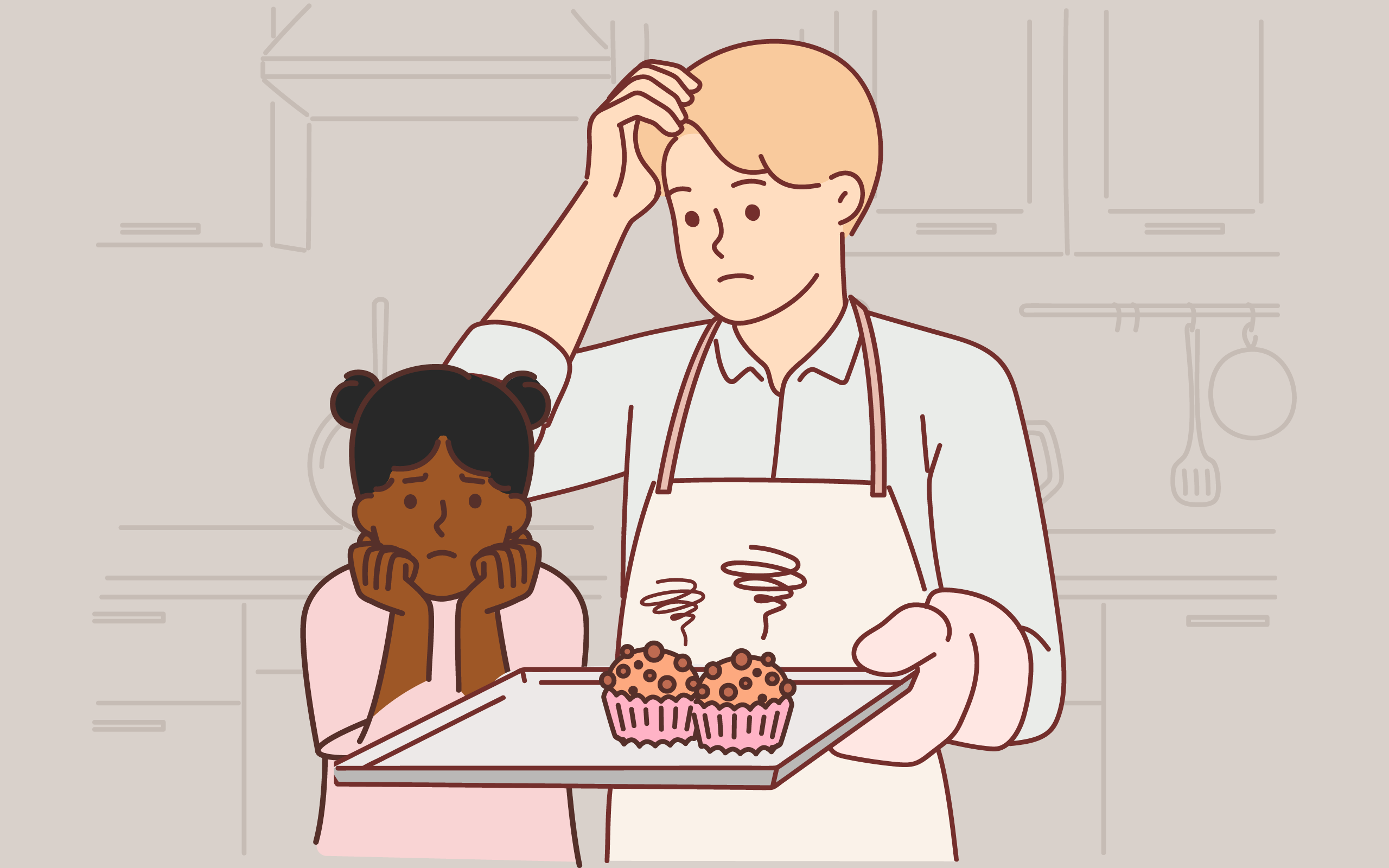
My budding baker hasn’t quite grasped that recipes aren’t suggestions. Last week, her banana muffins turned into banana charcoal.
But there she was, beaming with pride at her blackened creation and heading back to the kitchen to make tiramisu (or as she calls it tiraMayasu).
Maya’s muffin mania made me realise I need to set boundaries. But how do I set limits on something that brings Maya joy and occasionally produces delicious results, while also preventing our house from burning down and our grocery budget from being devoured by wasted ingredients?
Setting boundaries may be a piece of cake, but enforcing them is easier said than done.
Of course, there are vastly different ideas about what boundaries are and what they divide. Most specialists agree that boundaries are the lines we draw to safeguard our well-being.
We implement them to build trust with our partners, children, friends, colleagues, and bosses, and to shield ourselves from telemarketers and people adding us to WhatsApp groups.
Boundaries define the line between appropriate and inappropriate behaviour, and as Robert Frost’s neighbour pointed out, good fences make good neighbours.
In other words, a boundary is a line of respect. Another point most experts agree on is that you don’t set boundaries for other people; you set them for yourself.
All of this sounds straightforward in theory. But I’m living proof that boundaries are easier to define than to implement.
Every year, I try to change myself. On New Year’s Eve, I vow that from now on, I will establish better limits.
I won’t say yes when I mean no. I won’t let people walk all over me. But a few weeks (okay, days, okay, hours) later, I have footprints all over my body.
It’s not easy to set boundaries when, like me, you avoid conflicts at all costs, and when (again, like me) you’re easily flattered into doing things you don’t want to do.
I’m terrible at setting boundaries. Actually, that’s not quite true. I’m excellent at setting boundaries. I’m terrible at communicating them.
Communicating boundaries is less about saying no and more about finding ways to say yes that work for everyone.
So Maya and I struck a deal: she can bake, but only when I’m in the kitchen to supervise, and she has to follow the recipe before she’s allowed to “improve” it.
The boundary isn’t about stopping her from baking, but about helping her to bake successfully and safely.
Admittedly, there’s some self-preservation here too, because while I want to support my daughter’s passion, I also want to keep my kitchen intact and my waistline from expanding even further.
Maya’s baking exploits have shown me what boundaries really are. They’re not fences that divide people or walls that keep them out.
They’re guardrails that guide us, even if the road is occasionally littered with burnt banana muffins.
Related stories


The Change Programme
Are you thinking about making a change? Or trying to make a change? Or dealing with some change that’s happened? Whether you’re getting married or having a baby, moving house or jobs, starting a diet or stopping smoking… the Change Programme is for you.
Start the programme now!