Why I’m finally feeling brave enough to stare 40 in the face
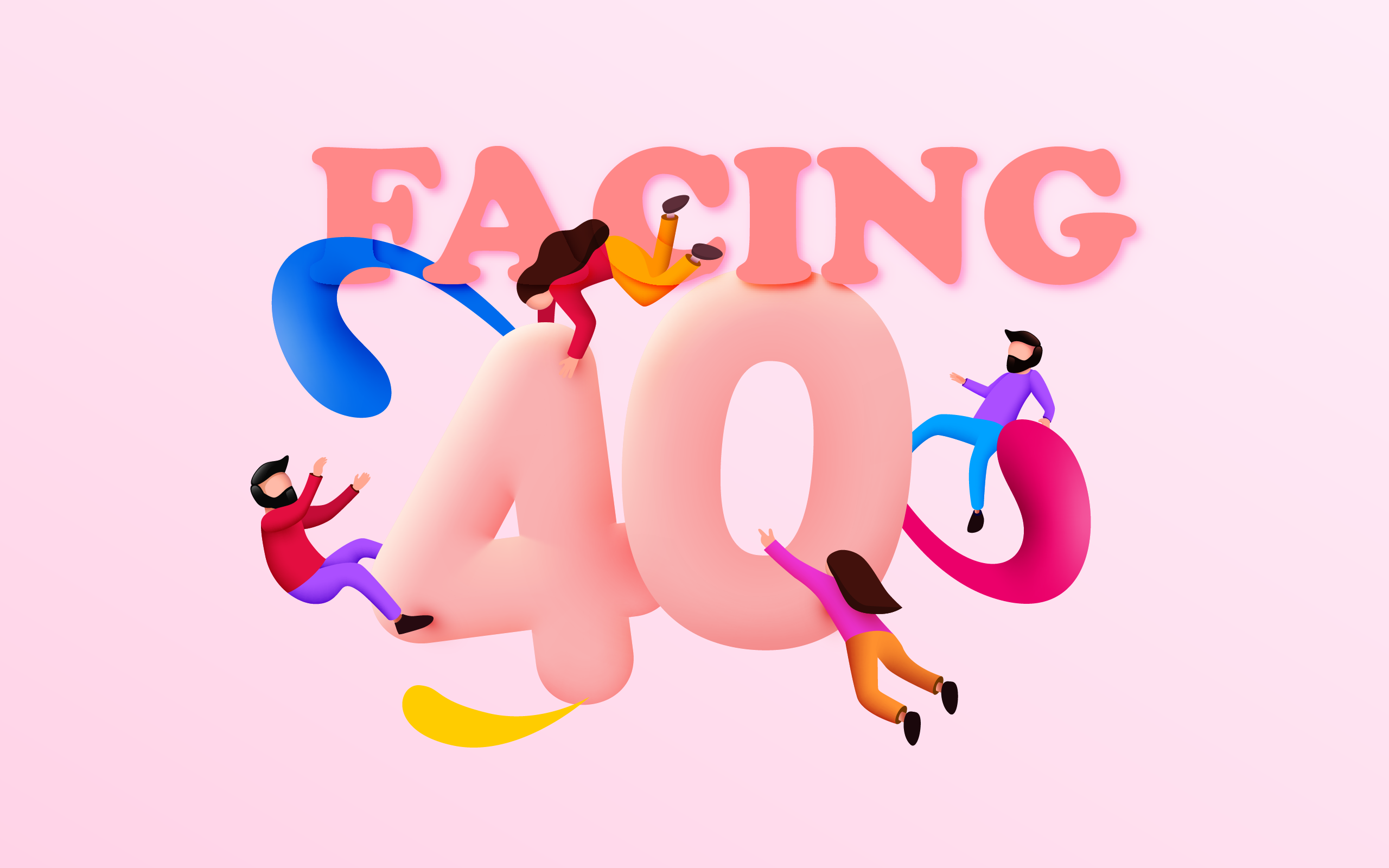
Life looks a lot different when you dare to shift your focus.
As my 40th birthday rears its head, I think again of my dad’s words at my 21st.
“You’re so brave,” he said. I didn’t quite know what he meant.
In the heady, fast-paced days of my 20s, everything I did felt ordained. My “bravery”, or lack thereof, was inconsequential to the outcome.
Now in my late 30s, as an elder millennial, I realise that I am brave.
I have faced a lifetime of tumultuous change, but I’ve also made choices that made me realise I’m never too old to grab the life I want by the unicorn horn.
At 36, trapped in a job that was safe but made me miserable, I branched out into professional photography.
At the time, it felt a bit crazy, brazen even, and certainly not deserved. I had three very young children at home, and a life running from bill to bill. Free time was a fantasy.
Despite this, I took my friend’s encouragement and took my camera out into the world.
What I’ve come to understand since then is that bravery isn’t the absence of fear or self-doubt. It’s the decision to move anyway. My generation has had plenty of practice.
We were the last children of the analogue world, doing homework by encyclopaedia and passing notes in class, before the internet arrived and rewrote every rule.
We watched the Twin Towers fall at 15 and grew up in the shadow of a world that suddenly felt less safe and less certain.
We entered the job market just as the 2008 financial crisis pulled the rug from under every promise our degrees had made us.
We built careers in print media and watched, with a particular kind of grief, as beloved magazine titles folded around us, casualties of the algorithm, the advertiser exodus, and a world that started getting its news from Twitter before we’d even had our morning coffee.
Just when we’d found our footing, COVID arrived. Then came loadshedding. Then AI, quietly at first, then all at once.
Suddenly, the craft we’d spent decades honing was being replicated, imperfectly but cheaply, by a chatbot.
Each of these moments demanded something from us. An adaptation, a reinvention, a willingness to let go of what we thought we knew and reach for something we couldn’t yet see clearly. That, I’ve realised, is the definition of bravery.
Choosing uncertainty over predictability felt counterintuitive after a lifetime of lessons about its dangers. “Why am I doing this?” I often thought, even while exhilarated mid-photo session.
I couldn’t believe how lucky I was to keep getting bookings, while the effervescent bubble of champagne-like joy filled my chest.
This insane enthusiasm for a fledgling passion-turned-profession in an age where my peers were well-established in their careers felt naive, risky, foolish.
I know I’m not the only one who made a drastic pivot in their middle age.
Ray Kroc was 52 when he turned McDonald’s into a global empire. Vera Wang didn’t design her first dress until she was 40. Colonel Sanders was 62 – 62! – when KFC began to take shape.
These are not stories of lucky timing. They are stories of people brave enough to begin anyway.
My photography is, in its own way, the same kind of story. It didn’t feel brave at the time. It felt presumptuous, indulgent, a little embarrassing even, the sort of pivot that invites raised eyebrows at dinner parties.
But it was also the first decision I’d made in years that felt entirely, uncomplicatedly mine.
My dad, I think, knew something at my 21st that I’m only now catching up to. Bravery isn’t a personality trait you’re born with. It’s a muscle.
For many of us, it takes a lifetime of upheaval, loss, reinvention and hard-won self-knowledge before we finally learn how to use it.
Forty is not a closing door. It’s the moment you realise you’ve been standing in the hallway long enough. It’s time to choose a room.
Related stories
The Change Programme
Are you thinking about making a change? Or trying to make a change? Or dealing with some change that’s happened? Whether you’re getting married or having a baby, moving house or jobs, starting a diet or stopping smoking… the Change Programme is for you.
Start the programme now!