Neil Sandilands, the Hollywood star living his best life in Onrus
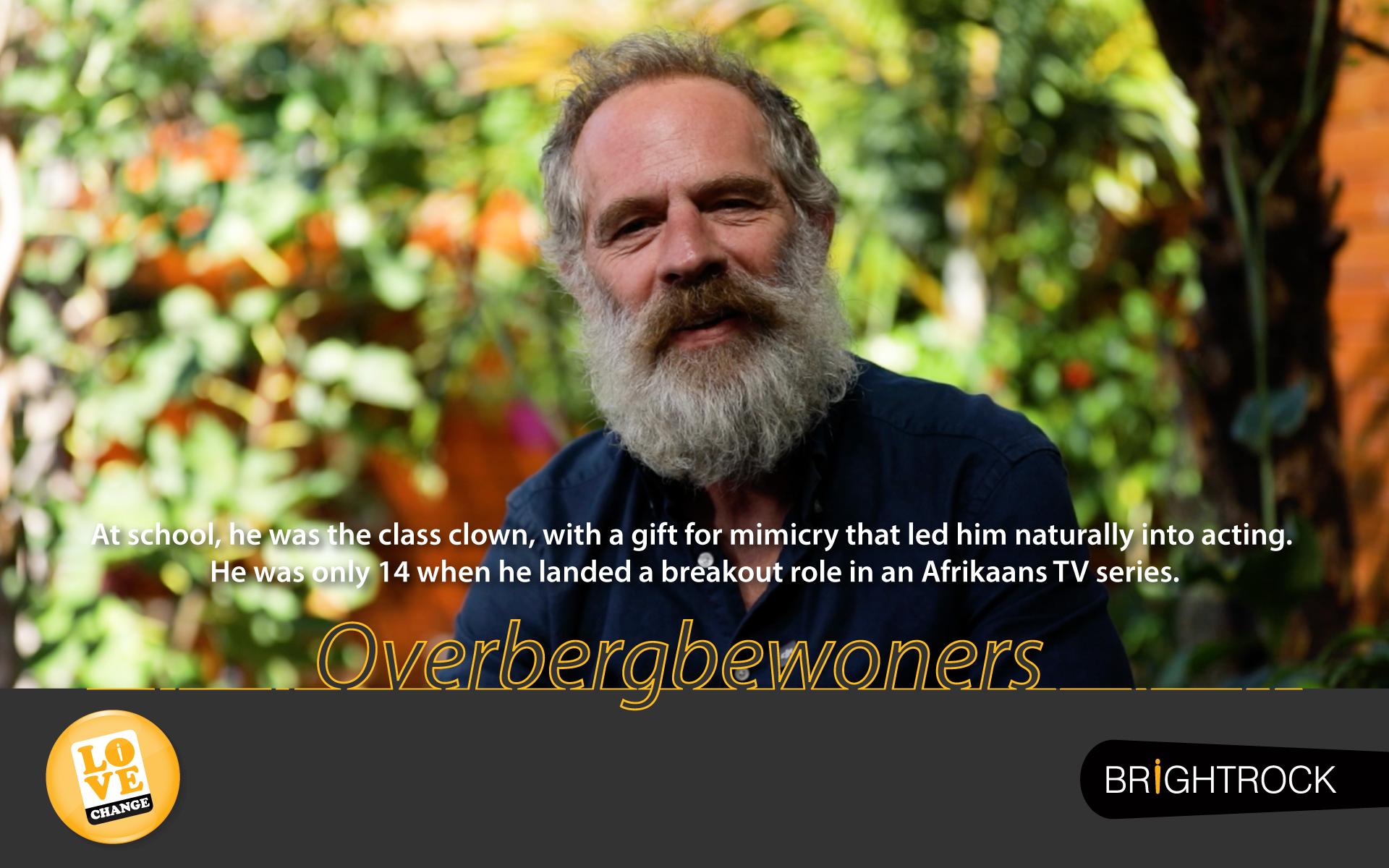
Here, in between pretending to be other people, he is happily at home as himself.
In the golden light of a late Atlantic afternoon, the actor sits on a bench overlooking the beachfront. He is wearing a red bucket cap and a light jacket to ward off the wind.
He reaches into the strawberry swirl of his soft serve ice cream cone and extracts the chocolate Flake. He looks at it with deep curiosity, like Hamlet regarding the skull of Yorick.
The waves fold into the sand. The sun begins its descent. It’s the end of another quiet day in Onrus, a restful little town that takes its name from a restless river on the foothills of the Hemel-en-Aarde Valley near Hermanus.
For Neil Sandilands, it’s home, a place where he can settle down and be himself, in between travelling afar and pretending to be other people.
Bart Kruger, the deli owner in 7de Laan; the villainous PJ Bellingham in Binnelanders; Clifford DeVoe, otherwise known as The Thinker, the criminal mastermind in the superhero action series, The Flash; General Abbot in Sweet Tooth on Netflix; Koro, leader of the peaceful Eagle Clan in Kingdom of the Planet of the Apes; Uncle Wilhelm, opposite Tom Hanks in the Western epic, News of the World.
Far from the wild, beguiling beauty of the Western Cape, Neil grew up in the mining town of Randfontein, west of Johannesburg.
His bloodline is part Scottish — “I come from a long line of whisky distillers and horse thieves,” he says — and part Afrikaans. “My mom was a Van der Merwe.”
He recalls a moment in his childhood that shone a spotlight on the path he would later pursue. He was listening to a new record on the family’s Pioneer hi-fi system. It was Bakgat, by David Kramer.
“It literally grabbed my head and turned it 360 degrees,” he says. “I immediately recognised sounds that I knew. I heard a version of Afrikaans that I understood. I only developed the vocabulary much later to make sense of it.”
At school, he was the class clown, with a gift for mimicry — “monkey see, monkey do” — that led him naturally into acting. He was only 14 when he landed a breakout role in the Afrikaans TV series, Meester. Then again, it might be more accurate to say that acting chose him.
“If you looked at it with sound reasoning and logic, I don’t think you would ever deliberately choose this path,” says Neil. “You wouldn’t say, ‘Wow, acting is cool, what a bakgat plan. I don’t think it works like that. You just get on and you ride the horse.”
Today, at 51, with flinty features and a long black-and-grey beard, he wonders how long he can stay in the saddle.
“As time goes by, you start considering what you can realistically still do,” he says. “Nobody knows. So you just get on with it and try to make the most of it while you still have time.”
Then, just like Hamlet, after all the to-be-and-not-to-being, he makes up his mind and gets ready for action.
“I think I still have a bit of fight left in me,” he says. More than that, he has a duty.
“While other people are doing plumbing, or cooking food, or commissioning monumental architecture, you have artists,” he says. They carry the weight of making the emotional world tangible for the rest of us.
“Perhaps they offer possibilities, ways of considering life from another angle. And you need a bit of courage for that.”
The craft that chose him takes him places, physically and metaphysically, that aren’t always easily accessible. He is a wanderer, stirred by a restlessness, an onrus, that he likens to what Eugène Marais called “die groot verlange”: the great yearning.
It is a quest for something, within you and without you, and the journey is a circle.
“You have this life,” says Neil, with the mountain and ocean and milkwood forest all around him. “You’re going to colour it in as beautifully as you can. And then, to my way of thinking, there is a homecoming.”
He sits on the beachfront, in the afterglow of twilight in Onrus.
“And then you come home.”
*You can watch Overbergbewoners, produced by BrightRock, on dsTV Streaming.
Related stories



The Change Programme
Are you thinking about making a change? Or trying to make a change? Or dealing with some change that’s happened? Whether you’re getting married or having a baby, moving house or jobs, starting a diet or stopping smoking… the Change Programme is for you.
Start the programme now!