The beautiful meaning of a spider’s web at a wedding
It was a simple ritual that reminded me of the power of community in our lives.
A much-loved godchild recently married her childhood sweetheart in what was a gloriously New Age hippy affair.
The food, all home-made, came from her parents’ impressive organic garden; the beer had been home brewed; the bride’s mother crocheted her an exquisite gossamer mohair cape after spinning the raw fleece into fibre.
Aunts, uncles, cousins, school and university friends all chipped in to help.
The wedding house – the main dwelling – is built on a large plot in the countryside and surrounded by cottages of varying sizes, purpose built to accommodate the needs of the like-minded people who live in them.
Together they form a mostly self-sufficient multi-generational “village”; a modern community which, in the city, would classify as a townhouse complex.
They share this in common: a deep-rooted connection to each other, to the land and the natural world.
And so, the hive went into wedding-prep action; cooking, cleaning, sewing, making…
Several young people paved a pathway through the garden to a wedding arch that someone else covered in wild flowers, picked the morning of the wedding to avoid them wilting in the hot sun.
After the moving wedding ceremony, with lots of poetry reading and the kind of vows that make one misty-eyed, came an invitation to join in a game that had us form a giant circle under a spreading oak tree.
My eye-rolling began.
Skeins of wool in a basket were handed out and each guest invited to hold onto one loose end while passing the ball to a neighbour.
When everyone was tethered to the person next to them, guests had to throw their ball to someone on the other side of the circle, calling out their wish (eternal love, clever children, happy holidays – that sort of thing) for the newlyweds.
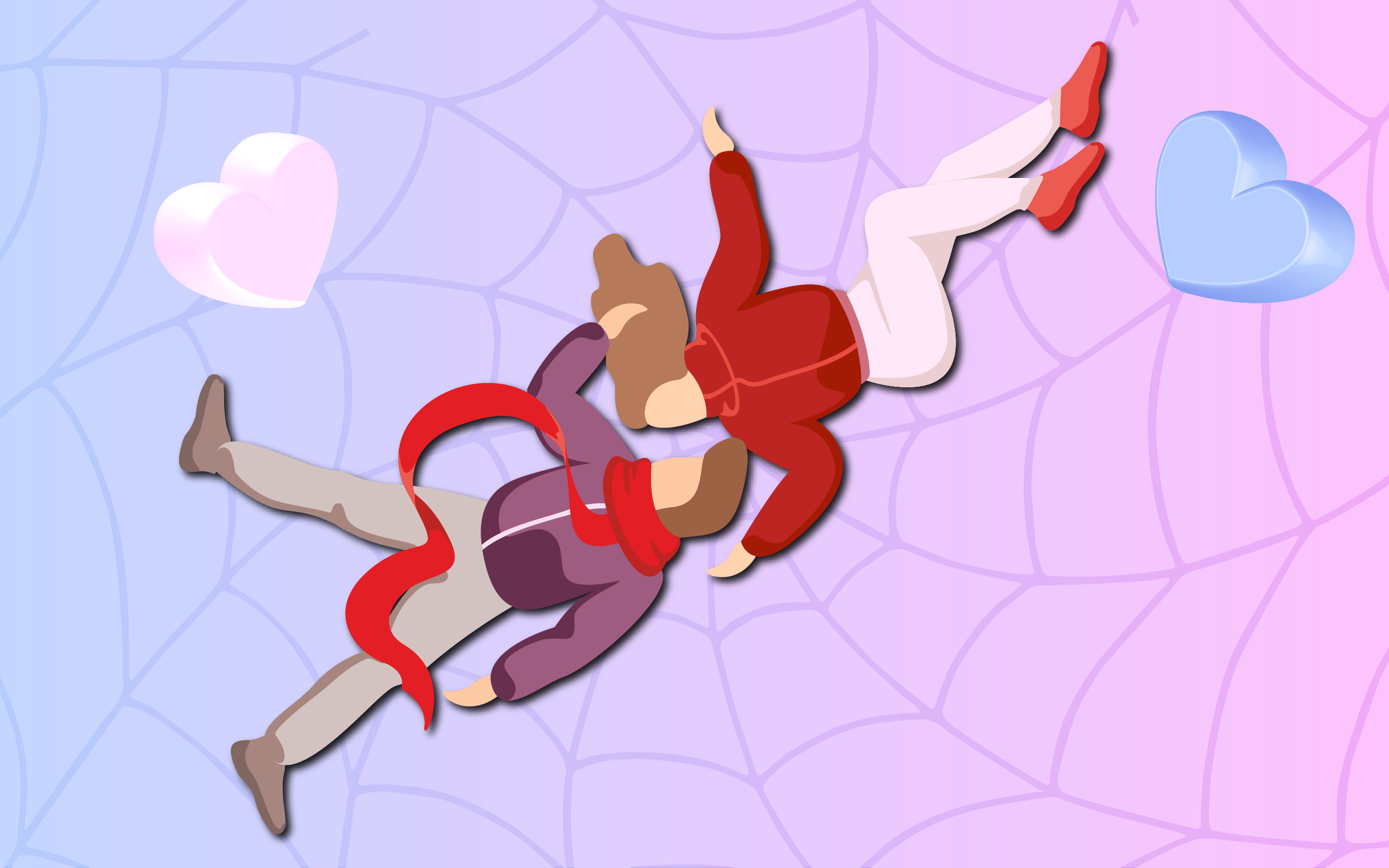
With each throw a spider’s web appeared in the middle as the wool strings criss-crossed each other.
At the end, the bride’s white bearded uncle pointed to the intertwined net, a surprisingly solid structure, that we had built from wool.
Gesturing to the circle of friends, family and colleagues who’d come far to witness this declaration of love, he told the young couple: “This is the representation of your community. We are the people who have your back. You can count on us and turn to us in times of trouble. We’ve got you.”
Not a dry eye in the house! No more eye-rolling from me.
It struck me: that’s what they’re for, communities; a gathering of like-minded people connected by things they share.
Often, it is proximity – like belonging to the same gym or yoga class. More often it’s shared value systems, similar culture; an identity that creates a sense of being a part of, of belonging.
It made me consider the communities that I belong to, who’ve “Got Me”, and I am heartened by how many singular and crossover groups I belong to that confirm my identity as they provide me with a safety net and mutual support.
Curiously, these communities shift and change throughout one’s life, a chessboard of moving parts, appearing when you need them then dissolving and moving into a place of less importance when you don’t.
Some stay constant, giving form to the You that you are; like your extended family, church group or university friends.
But switch jobs, move to an aqua class at another gym, leave a book club, leave your neighbourhood for another suburb and watch how your little community changes.
I have not drunk alcohol for 19 years. I consider my sobriety my greatest achievement.
It is why I am so grateful to belong to one very special community whose critically important collective purpose saved my life: Alcoholics Anonymous.
To begin with, it is not a community one really wants to belong to.
Drinking to excess is a deeply shameful affliction, one that causes unimaginable pain for other people – and yourself. It’s a club I never wanted to join, a group I really didn’t want to be a part of.
And yet, those rooms full of people busy putting themselves back together after the intolerable agony of alcohol addiction came to be a sanctuary. My community. They knew me. They were me. They got me.
The often-broken people in this safe haven of recovery became my mirror, my witnesses, my confidantes; confessors to the penitent me.
They put me back on my feet when my out-of-control life was filled with despair.
They listened to my shameful war stories and told me theirs so that I didn’t feel judged.
At last, I had found a community who understood me. I was home.
I have always drunk alcoholically. When everyone was having one glass of wine, I wanted two. From my very first drink I found alcohol thrilling. It made me feel less self-conscious, oiled social occasions.
At the end, I was shakily pulling a bottle of Vodka from under my bed and taking a swig to steady my nerves when I woke.
I was in deep trouble. Still, it took many years before I found my community. Like all of sober them, I first had to admit I was powerless over alcohol. Only then could I relinquish control and ask the community of 12-steppers to help me regain my equilibrium.
It’s heady stuff, belonging to a group of people who might be absolutely nothing like you (doctors, captains of industry and high court judges mingle with labourers, students, plumbers and electricians) but who are exactly like you. You share a disease. You share the cure.
It is humbling and gloriously comforting to not have to white-knuckle your way into recovery.
It is a well-known fact that getting sober might be easy(ish). Staying sober is a gargantuan feat. You are always one drink away from breaking your sobriety.
You rely on, and depend on, the community that AA provides to get you through the scary first year… for the rest of your life actually.
It’s imperative that you abandon your drinking buddies. Your new community provides sober companionship.
Drinking is a full-time job: commissioning, drinking, recovering. When you stop you have more time than you need. Again, going to meetings – sometimes two or three a day – fills the void.
It is what I like to think of as my Crucial Community.
As my mother used to say to encourage unity in our family: It’s easy to break a twig. A bundle of twigs? Not so much.
To quote the words of English soccer club Liverpool’s world-famous anthem:
Walk on through the rain
With hope in your heart
And you’ll never walk alone.
Related stories


The Change Programme
Are you thinking about making a change? Or trying to make a change? Or dealing with some change that’s happened? Whether you’re getting married or having a baby, moving house or jobs, starting a diet or stopping smoking… the Change Programme is for you.
Start the programme now!